


Hey there! As a supplier of Rear Contact Solar Cells, I'm super excited to dig into how these bad boys perform in urban areas. Let's get right into it!
What are Rear Contact Solar Cells?
First off, let's quickly go over what Rear Contact Solar Cells are. Rear Contact Solar Cells, also known as Back Contact Solar Cell, are a type of solar cell where all the electrical contacts are placed on the back side of the cell. This is a major departure from traditional solar cells, where the contacts are on both the front and back. The main advantage of this design is that it eliminates the shading caused by the front contacts, allowing more sunlight to reach the active area of the cell.
There are different types of Rear Contact Solar Cells, but one of the most well - known is the Interdigitated Back Contact Solar Cells. In these cells, the positive and negative contacts are arranged in an interdigitated pattern on the back, which helps in efficient charge collection.
Performance in Urban Areas
1. Space Constraints
Urban areas are notorious for their limited space. Rooftops in cities are often filled with HVAC units, water tanks, and other equipment. Rear Contact Solar Cells are a great solution here. Their high - efficiency design means you can generate more power per square foot compared to traditional solar cells. This is crucial because you can make the most of the limited rooftop space available.
For example, if you have a small rooftop in a downtown area, installing Rear Contact Solar Cells can help you generate a significant amount of electricity. You don't need to cover the entire rooftop to meet your energy needs. This is especially important for commercial buildings in the city, where space is at a premium, and every square foot of rooftop can be used more effectively with these cells.
2. Aesthetics
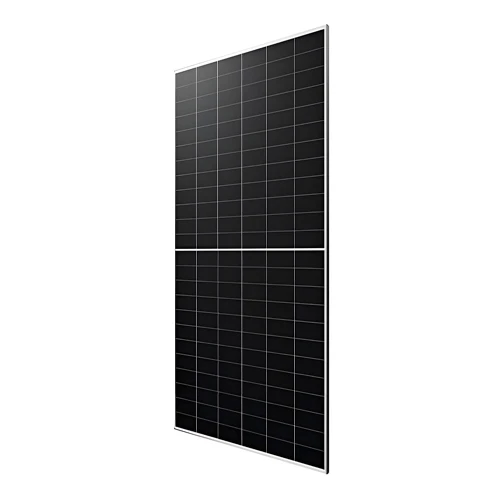
Let's face it, in urban areas, aesthetics matter. No one wants a bunch of ugly solar panels ruining the look of a building. Rear Contact Solar Cells have a sleek and clean appearance. Since all the contacts are on the back, the front of the panel looks smooth and uniform. This makes them more visually appealing and easier to integrate into the architecture of urban buildings.
Architects and building owners are more likely to choose Rear Contact Solar Cells because they can blend in with the building's design. Whether it's a modern skyscraper or a historic building with a renovation project, these cells can be incorporated without detracting from the overall look.

3. Shading
Urban environments are full of obstacles that can cause shading. Tall buildings, trees, and even nearby structures can cast shadows on solar panels. Traditional solar cells are very sensitive to shading. Even a small amount of shading on the front contacts can significantly reduce the power output of the entire panel.
Rear Contact Solar Cells, on the other hand, are much more tolerant of shading. Since the contacts are on the back, shading on the front surface doesn't directly affect the electrical performance. This means that even if part of the panel is shaded in an urban setting, the overall power output won't drop as dramatically as it would with traditional cells.
4. Energy Yield in Variable Light Conditions
In urban areas, the sunlight is often scattered and comes from different angles due to the surrounding buildings. Rear Contact Solar Cells are designed to capture sunlight more effectively from various angles. Their high - efficiency design allows them to convert more of the available sunlight into electricity, even in less - than - ideal light conditions.
For instance, in the early morning or late afternoon when the sun is low on the horizon, Rear Contact Solar Cells can still generate a fair amount of power. This is in contrast to some traditional solar cells that may have a more limited range of effective light angles.
Challenges in Urban Areas
1. High Installation Costs
One of the main challenges of using Rear Contact Solar Cells in urban areas is the high installation cost. These cells are more advanced and complex to manufacture, which drives up the price. Additionally, the installation process in urban areas can be more expensive due to factors like difficult access to rooftops, safety regulations, and the need for specialized equipment.
However, it's important to note that the long - term benefits in terms of energy savings and efficiency can offset these initial costs. As the technology matures and production volumes increase, we expect the costs to come down over time.
2. Maintenance
While Rear Contact Solar Cells are generally reliable, maintenance in urban areas can be a bit tricky. Since they are often installed on rooftops of tall buildings, accessing the panels for maintenance can be difficult and dangerous. Specialized equipment and trained personnel are required to perform maintenance tasks.
But on the bright side, the durability of these cells means that they require less frequent maintenance compared to some traditional solar cells. And with proper planning and regular inspections, any potential issues can be caught early and resolved.
Case Studies
Let's take a look at a couple of real - world examples of Rear Contact Solar Cells in urban areas.
In a large commercial building in a major city, they installed Rear Contact Solar Cells on their rooftop. Despite having a relatively small rooftop area, they were able to meet a significant portion of their electricity needs. The high - efficiency design of the cells allowed them to generate more power than they would have with traditional cells. And the sleek appearance of the panels didn't detract from the building's modern architecture.
Another example is a residential building in an urban neighborhood. The homeowners were concerned about shading from nearby trees. By choosing Rear Contact Solar Cells, they were able to minimize the impact of shading on their power output. Even when parts of the panels were shaded, they still got a decent amount of electricity generated.
Why Choose Our Rear Contact Solar Cells?
As a supplier of Rear Contact Solar Cells, we take pride in offering high - quality products. Our cells are manufactured using the latest technology, ensuring maximum efficiency and durability. We have a team of experts who can provide you with the best advice on installation, maintenance, and system design.
Whether you're a building owner looking to reduce your energy costs or an architect wanting to incorporate sustainable energy solutions into your designs, our Rear Contact Solar Cells are a great choice. We can work with you to customize a solar solution that fits your specific needs in the urban environment.
If you're interested in learning more about our Rear Contact Solar Cells or want to discuss a potential project, we'd love to hear from you. Contact us to start a conversation about how we can help you harness the power of the sun in your urban setting.
References
- Green, M. A., Emery, K., Hishikawa, Y., Warta, W., & Dunlop, E. D. (2014). Solar cell efficiency tables (version 42). Progress in Photovoltaics: Research and Applications, 22(1), 1-9.
- Sinton, R. A., & Cuevas, A. (1996). Contactless determination of current–voltage characteristics and minority - carrier lifetimes in semiconductors from quasi - steady - state photoconductance data. Applied Physics Letters, 69(2), 251 - 253.
- Huang, X., & Deng, S. (2017). Recent progress in high - efficiency back - contact crystalline silicon solar cells. Renewable and Sustainable Energy Reviews, 79, 1137 - 1148.


